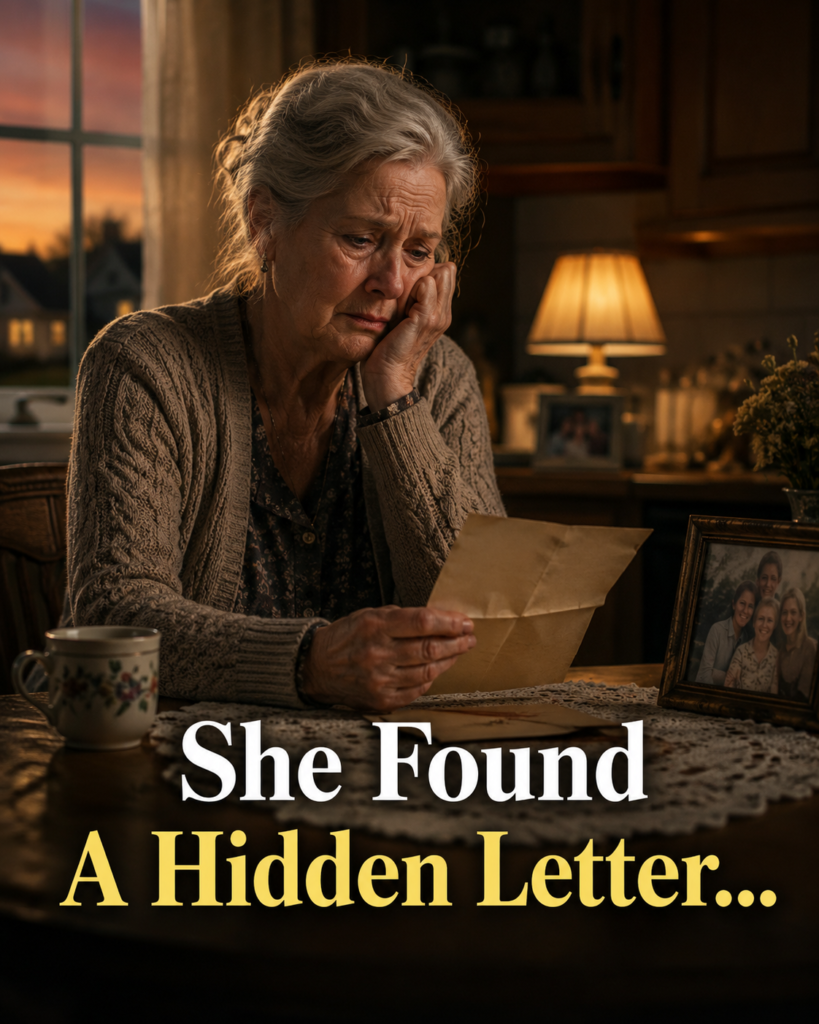
Margaret Wilson had been living alone for eleven months, but some mornings still felt impossible.
At 68, she had learned how to make coffee for one, how to sit in silence without expecting another voice, and how to walk past her husband’s favorite chair without breaking down every single time.
But grief is strange.
Some days, it lets you breathe.
Other days, it sits quietly beside you and reminds you that the life you loved is gone.
Margaret’s husband, Thomas, had passed away after 42 years of marriage.
He had not been a rich man.
He had not been famous.
But to Margaret, he had been everything.
He was the one who warmed up the car in winter before she had to go anywhere.
The one who always remembered how much sugar she liked in her tea.
The one who left little notes around the house that said things like, “Don’t forget to smile today,” or “You still look beautiful, even in that old sweater.”
After he was gone, the house became painfully quiet.
Their children lived in different states, each with busy lives, jobs, and families of their own. They called when they could, but the calls were brief.
“Mom, you okay?”
“Yes, sweetheart, I’m fine.”
But she wasn’t.
Not really.
She missed the sound of footsteps in the hallway.
She missed the newspaper already opened on the kitchen table.
She missed hearing Thomas hum softly while fixing something that wasn’t even broken.
One rainy evening, Margaret decided to clean an old wooden cabinet in the dining room.
It was one of those pieces of furniture that had been in the family for years — heavy, dark, and full of memories. Inside were old documents, expired coupons, photo albums, birthday cards, and receipts from places they had visited long ago.
She almost stopped halfway.
But then she noticed something caught behind the bottom drawer.
It was an envelope.
Yellowed slightly with age. Folded neatly. Her name written on the front in the handwriting she would have recognized anywhere.
Margaret.
Her hands froze.
She sat down slowly, staring at the envelope as if it might disappear.
For a long moment, she couldn’t open it.
It felt too personal. Too final. Too powerful.
Then, with trembling fingers, she broke the seal.
Inside was a handwritten letter.
The Letter
My dearest Margaret,
If you are reading this, then I’m no longer sitting across from you pretending not to notice when you steal fries from my plate.
I wish I could have stayed longer.
I wish I could have had more mornings with you, more quiet dinners, more Sunday drives, more chances to hold your hand for no reason at all.
But if life has taught me anything, it’s that love doesn’t end when a person leaves this world.
And if you’re reading this now, I need you to know something very important:
You must keep living.
Not just breathing.
Not just passing the days.
Living.
I know you, Margaret.
You’ll say you’re “fine” when you’re not.
You’ll smile for the children so they don’t worry.
You’ll sit by the window and think your best years are behind you.
But listen to me carefully:
Your life did not end with mine.
There are still sunsets you haven’t watched.
Still places you haven’t revisited.
Still people who need your kindness.
Still mornings waiting for your laughter.
And there’s something else.
In the blue folder behind the old books on the top shelf of the study, I left a few things for you. Nothing huge. Just enough, I hope, to remind you that I was still thinking of you — even when I knew I might have to leave first.
Use it for something beautiful.
Take the trip we always talked about.
Fix the garden the way you wanted.
Help someone if your heart tells you to.
Or simply buy yourself peace.
Whatever you do, promise me one thing:
Don’t lock your heart away with my memory.
Carry me with you, yes.
Love me always, yes.
But don’t stop living because I’m gone.
If you ever feel alone, read this again and imagine me saying what I always said before bed:
“We’re going to be okay.”
Because somehow, in some way, you will be.
With all the love I had,
and all the love I still have,
Thomas
By the time Margaret reached the end of the letter, she was crying so hard she had to place it down on the table.
Not because it hurt.
But because, for the first time in months, it felt like Thomas had spoken directly to her.
She sat in silence, pressing the letter to her chest.
Then she remembered the blue folder.
Margaret stood up immediately and walked into Thomas’s study.
The top shelf was exactly where he said it would be. Behind a row of old books, she found a plain blue folder tucked away carefully.
Inside were documents, a savings certificate, and a handwritten note clipped to the front.
“For Margaret’s new beginning.”
There was more money there than she expected.
Not enough to change the world.
But enough to change hers.
Enough to repair the little sunroom she had always wanted.
Enough to travel to the seaside town they once visited on their anniversary.
Enough to breathe without fear for a while.
Margaret smiled through tears.
Even in his absence, Thomas had found a way to take care of her.
That night, she did something she had not done in a long time.
She opened the curtains.
She sat by the window with a warm cup of tea and watched the rain slow into a soft drizzle.
And instead of feeling empty, she felt something new.
Hope.
Over the next few weeks, little things began to change.
She joined a local book club after nearly talking herself out of it three times.
She replanted the neglected flowers in the garden.
She invited an elderly neighbor over for lunch.
She even began writing small notes in a notebook — memories of Thomas, lessons from life, and thoughts she wanted her grandchildren to one day read.
Months later, Margaret finally took the trip Thomas had mentioned.
She visited the seaside town they both loved, walked slowly along the shore, and stood in the golden evening light with the wind in her hair.
For the first time in a very long time, she did not feel like someone who had been left behind.
She felt like someone carrying love forward.
When she returned home, her daughter noticed the change immediately.
“Mom,” she said gently over the phone, “you sound different.”
Margaret smiled.
“I think,” she said, “I’m starting to live again.”
That hidden letter did not erase her pain.
It did not bring Thomas back.
But it reminded her of something grief had almost stolen:
That love is not only something we lose.
Sometimes, love is also what helps us begin again.
And in a quiet house, on an ordinary rainy evening, one letter gave a lonely woman the strength to open her heart to life once more.
Sometimes the people we miss the most still find a way to guide us — even after they’re gone.


